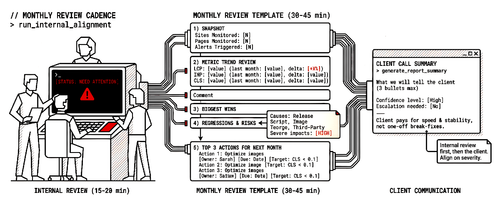
Monthly Performance Review Template for Agency Teams
Run better client performance reviews with one repeatable monthly template: what changed, what regressed, what to fix next, and who owns each action.
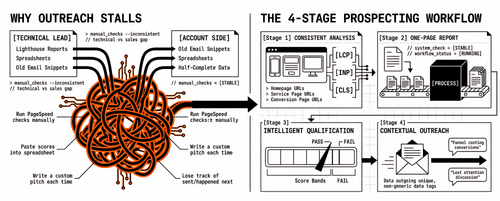
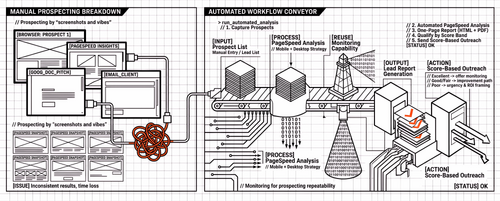
Use a repeatable PageSpeed prospecting workflow to move from raw URLs to qualified leads: analyse mobile and desktop, generate one-page reports, segment by score band, and run focused outreach.
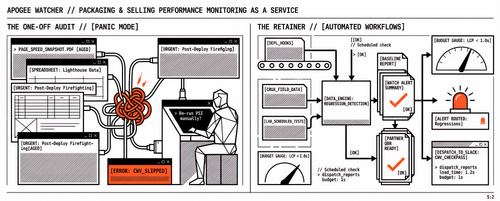
Package web performance as a paid service: separate audits from retainers, price against risk, and prove value with data clients can forward—not endless manual PSI runs.
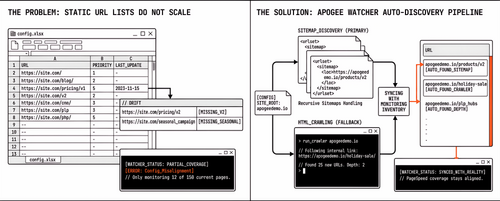
You cannot monitor what you have not listed. For a single marketing site, that list might live in a spreadsheet. For an agency with dozens of properties, each with new landing pages, campaign paths, and refactors, the list rots within weeks. Someone adds /pricing/v2 and nobody updates the monitor.
Turning performance monitoring into new business is mostly a workflow problem: find prospects, run consistent audits, turn results into a shareable one-page snapshot, and send score-band outreach. This post outlines the process and shows what to reuse from your monitoring approach.
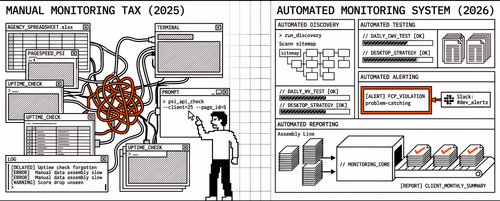
Every agency managing client websites pays a hidden tax: the time and effort spent on manual performance monitoring. Automated monitoring eliminates this tax entirely.
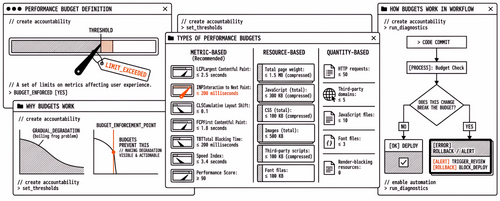
A performance budget is a set of limits on metrics that affect user experience. It's a threshold you agree not to exceed. When a metric crosses the budget, it triggers a review, an alert, or a rollback — just like a financial budget triggers action when you overspend.
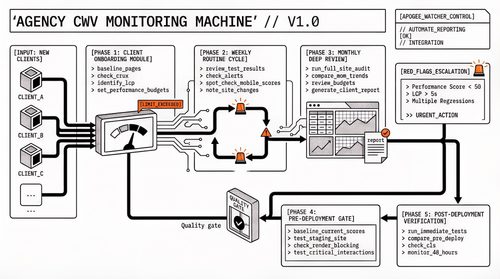
If you run an agency managing 10, 25, or 50+ client sites, you can't afford ad-hoc performance monitoring. One missed regression can cost you a client. One undetected CLS issue can silently tank a client's rankings for weeks before anyone notices. This checklist gives you a repeatable system.
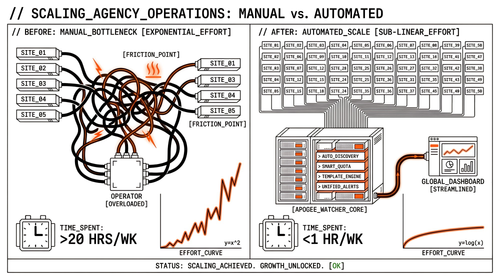
Your agency is growing. You've gone from managing 5 client sites to 25, and you're adding more every month. But your performance monitoring process hasn't scaled with your business.
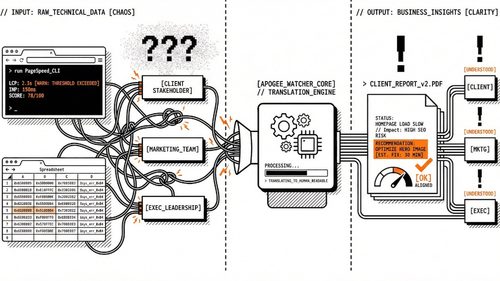
You've just run a PageSpeed test and the results are in—but when you try to explain them to your client or marketing team, you're met with blank stares. This is the stakeholder visibility problem.
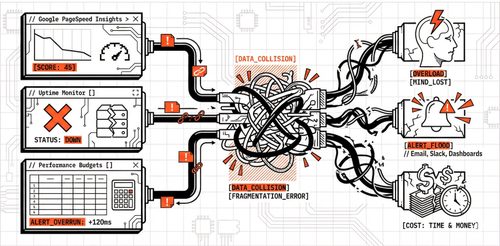
You know the drill. You have Google PageSpeed Insights open in one tab, checking scores manually. Your uptime monitoring tool in another. Performance budgets tracked in a spreadsheet. This is the fragmented monitoring problem.
Running a digital agency means managing dozens of client websites. We are building Watcher to solve the performance monitoring problems we faced ourselves.