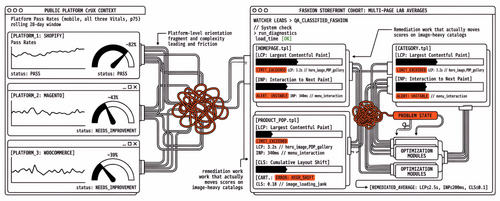
Benchmarks turn vague performance goals into comparable numbers. Instead of asking whether a site is "fast enough," teams look at p75 Core Web Vitals for a sector or platform, then place their own origins beside that context. This tag collects Apogee Watcher articles that publish methodology, public CrUX context, and transparent sample cohorts for niches such as ecommerce and EdTech.
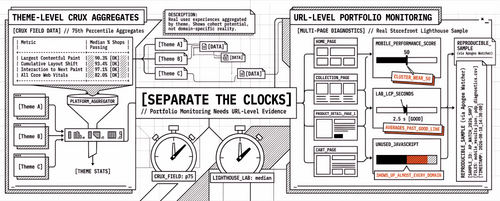
Useful benchmarks start with field data. Chrome UX Report (CrUX) reflects real Chrome visitors over a rolling window, usually at the 75th percentile. Lab runs from PageSpeed Insights or Lighthouse help with diagnosis, but they should not sit in the same column as CrUX pass rates. Our posts keep that split explicit so agencies do not mix synthetic scores with field eligibility in client briefings.
Metric focus stays on Google's three Core Web Vitals: LCP for loading, INP for responsiveness, and CLS for visual stability. Sector medians set expectations; they do not replace monitoring the URLs where money or enrolment happens. Pair tables with a performance budget so thresholds become operational.
Platform and vertical posts matter because stacks differ. Ecommerce storefronts struggle with product imagery, apps, and checkout scripts. WordPress publishers and WooCommerce shops add plugin and theme weight. Learning platforms mix marketing origins with heavy lesson players. Niche benchmarks keep comparisons fair: a Shopify product page is not the same workload as an LMS login.
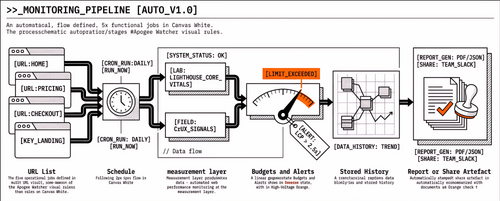
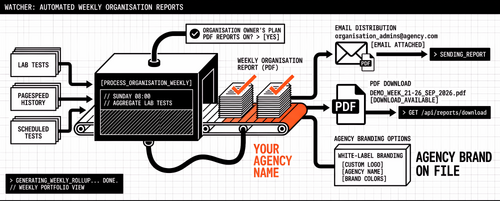
In practice: pick a cohort you can remeasure monthly, record collection date and tool source, mark insufficient CrUX data explicitly, and publish median LCP, INP, CLS, plus all-CWV pass rate. Then schedule checks with automated monitoring so regressions appear before the next review. For agencies, that rhythm feeds clearer client reports and stronger SEO conversations without inventing industry averages.
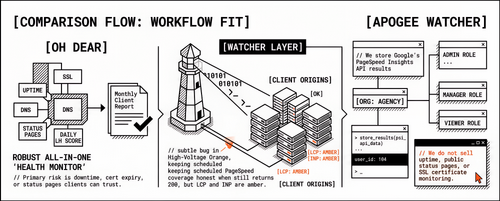
We also situate benchmarks beside the cost of poor performance and honest tool comparison pieces, so you can choose workflows that scale across portfolios. Browse this tag for data-backed baselines; use the linked tags for metric deep-dives, budgets, and monitoring setup.
Monitor your sites
> Pay attention only when you need to.
Watcher replaces recurring PageSpeed checks, monitoring spreadsheets and manual report preparation with scheduled testing, alerts and client-ready reports.
> Get a free domain check - no account needed.