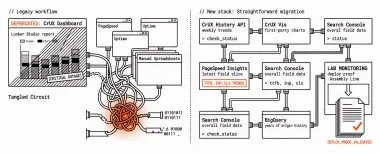
CrUX Dashboard Retired: Where to Get TTFB, INP, and Field History
Google retired the CrUX Dashboard in November 2025. Here is the migration path for TTFB, INP, CLS, and field history via CrUX Vis, the History API, PageSpeed Insights, and BigQuery.
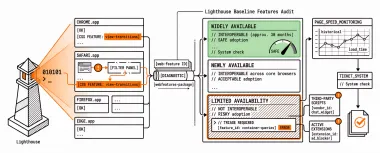
Lighthouse now reports Baseline status for web platform features on a page, including third-party scripts. How to read Widely, Newly, and Limited availability, and what to do next.
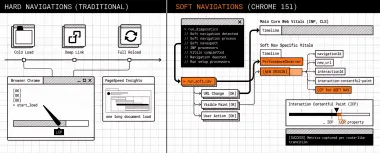
Chrome 151 ships soft-navigation and interaction-contentful-paint timeline entries unflagged. What that means for SPA Core Web Vitals, how to prepare your routes, and what scheduled PageSpeed monitoring still covers.
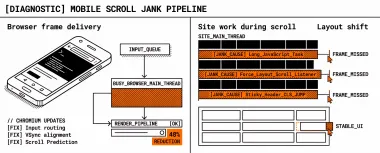
Chrome on Android cut the frequency of janky scrolls by about 48% between 2023 and 2026, but browser pipeline work does not clear your scroll handlers, long tasks, or layout shifts. Here is what to check on the site.
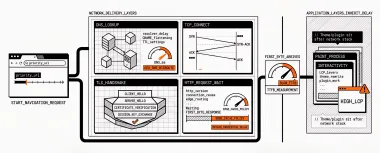
Walk the request path before you rewrite the theme: DNS, TLS, HTTP, connection setup, CDN routing, and cache rules, and how each layer shows up when you try to reduce TTFB in lab tools.
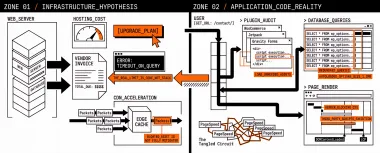
When a WordPress site is slow, buyers often point at hosting first. Across hundreds of enterprise projects, the bottleneck is usually code: plugins, queries, autoload bloat, and third-party scripts, not the server tier.
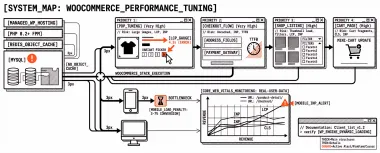
WooCommerce performance tuning in 2026: hosting, HPOS, caching rules that exclude cart and checkout, cart fragments, image LCP fixes, and which URLs to monitor for Core Web Vitals before CrUX catches regressions.
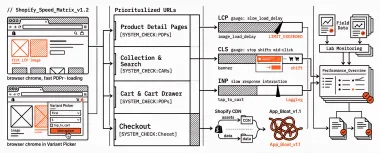
A Shopify-specific Core Web Vitals guide: which templates to fix first, how themes and apps affect LCP, INP, and CLS, and how to monitor PDP, cart, and checkout without treating every page like the homepage.
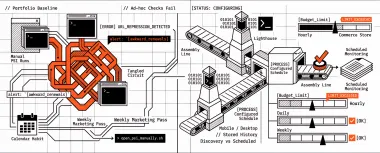
Flat daily schedules waste quota on brochure sites and starve checkout URLs. Here is how agencies set PageSpeed monitoring frequency per site, prioritise pages, and keep coverage honest as the portfolio grows.
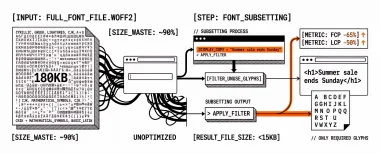
Web fonts carry your brand, but full character sets often waste kilobytes on every page view. Font subsetting keeps only the glyphs you need so LCP and First Contentful Paint improve without dropping custom typography.
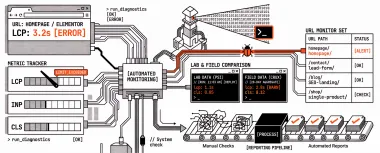
WordPress sites fail in predictable ways: plugin updates, page builders, and caching layers that hide problems until a client notices. This guide shows what to monitor, which URLs matter, and how to run monitoring without living in PageSpeed Insights.
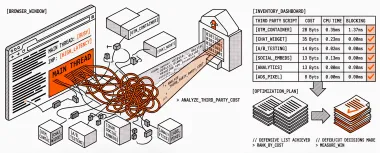
How to find which tags and widgets cost you LCP, INP, and main-thread time, then fix or fence them without stripping analytics you still need.