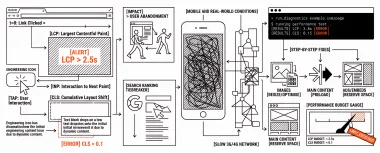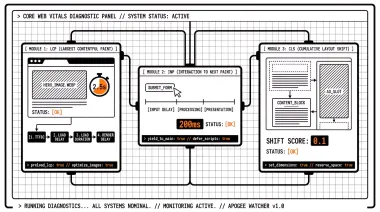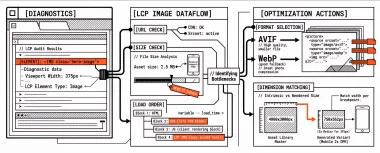
Image Optimisation Strategies for Better LCP Scores
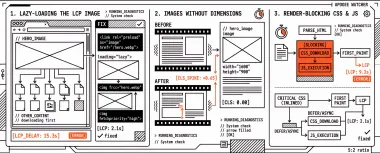
Largest Contentful Paint often comes down to one big image. Here is how to pick formats, size for the viewport, wire responsive images, and verify the win—without guessing.
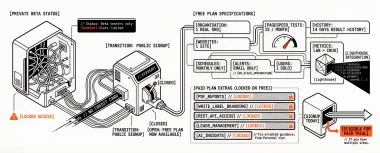
Apogee Watcher’s Free plan: what you get (one site, 15 tests a month, monthly schedules, email alerts), what stays on paid tiers, and why we are opening sign-up before full public launch.
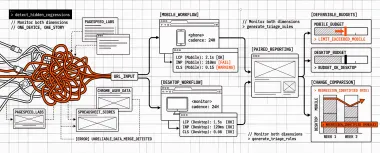
Mobile and desktop Core Web Vitals can tell different stories. Here’s how to monitor both so your reports stay accurate and your fixes stay prioritised.
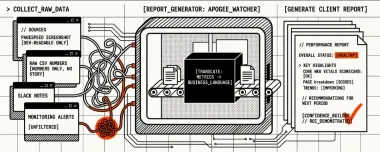
What a monthly Core Web Vitals report should include for website clients: status, LCP/INP/CLS mobile and desktop scorecard, trends, budget breaches, top regressions, and next steps — plus a filled example and how to pull the numbers from monitoring.
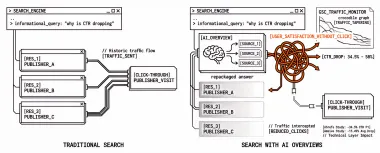
AI Overviews don't create clicks—they reduce them. Two large studies, from Ahrefs and Amsive, have put numbers to what many site owners already feel: organic traffic from informational queries is dropping, and AI Overviews are a major factor.
You've run PageSpeed Insights. The scores are poor. You've optimised images, minified CSS, and still LCP stays red. Or CLS keeps spiking on client sites. Or users complain that clicks feel sluggish even though the page "loads fast". The problem isn't always obvious—some of the worst PageSpeed mistakes look like best practice at first glance.
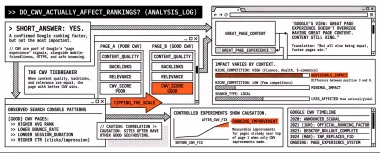
You need to know whether fixing Core Web Vitals will actually move the needle for rankings — and what to tell clients. Here's what the data shows so you can prioritise with confidence and justify monitoring.
Website load speed is how quickly your pages load and become usable for visitors. It’s the time from when someone opens a link to when the main content is visible and the page responds to taps or clic...
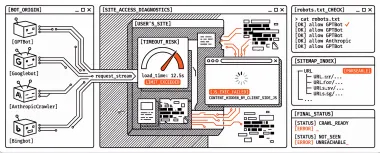
ChatGPT, Perplexity, Claude, and Google’s AI Overviews don’t magic their answers out of thin air. They rely on systems that fetch, read, and interpret web pages. If your site is slow, times out, or hides content behind heavy client-side rendering, those systems may never get your content in the first place.
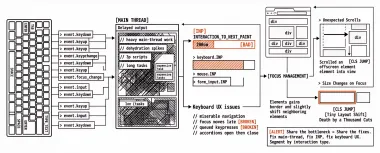
Core Web Vitals (LCP, INP, CLS) tend to get treated as "performance metrics". Accessibility tends to get treated as "compliance work". That split is convenient, and it's wrong in practice. A keyboard user doesn't experience your site as a Lighthouse report. They experience it as a sequence of interactions: tab, focus, type, submit, wait, recover, continue. The same bottlenecks that hurt your Web Vitals routinely break assistive-tech UX. The nice part is that the fixes often pull double duty.
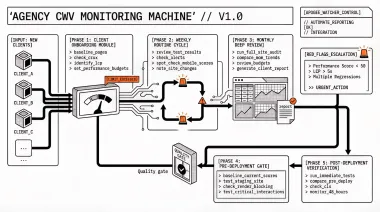
Agency Core Web Vitals monitoring checklist: onboarding, weekly and monthly routines, deploy checks, plus a three-layer early-warning sequence to catch regressions before Search Console and SEO impact.
The Three Numbers That Control Your Search Rankings Google's Core Web Vitals boil down to three metrics: LCP, INP, and CLS. Each measures a different dimension of user experience, and each has specifi...